


Spring 2014 Update
April was a busy month! I was invited to participate in Nevada County Superior Court’s Annual Family Law Update on April 10th. This program covers recent cases and developments for family law attorneys. I was invited to share about Estate Planning considerations during the marital dissolution process.
In Estate Planning, we focus on building and preserving wealth for your future together. Family Law is often about dividing and separating assets in a dissolving marriage.
In preparing my presentation, I learned what actions clients should take before filing for dissolution, which triggers a series of Automatic Temporary Restraining Orders (ATROs). While the dissolution is pending, modifying beneficiaries is prohibited without the agreement of both spouses or court approval. After a divorce, a new Will or Trust is usually desirable. Updating designated beneficiaries on all accounts is also important, and unfortunately may be overlooked. In such a circumstance, a court then must review any existing evidence proving that the deceased intended for the former spouse to remain as beneficiary.
Another important distinction is how “same-sex” marriages differ from “domestic partnerships” after the Supreme Court’s decision in Estate of Windsor (Windsor v. United States, 570 U.S. 12 (2013). The IRS denied the benefit of the marital deduction to the deceased Ms. Windsor’s wife, resulting in estate tax due of $363,000. The Supreme Court found the differential treatment of a same-sex spouse was unconstitutional, based on the due process and equal protection clauses of the Fifth Amendment. This ruling, invalidating DOMA (Defense of Marriage Act), has extended marital benefits to same-sex spouses, including social security.
Civil unions, such as California’s Registered Domestic Partnership laws, are not the same as a “marriage”. Different benefits are thus afforded by States which extend benefits to same-sex partners who have not married. Financial and legal considerations may affect a couple’s decision whether to marry. Understanding which federal and state laws apply in this quickly-evolving area is a challenge for both estate planning and family law attorneys.
♦ ♦ ♦
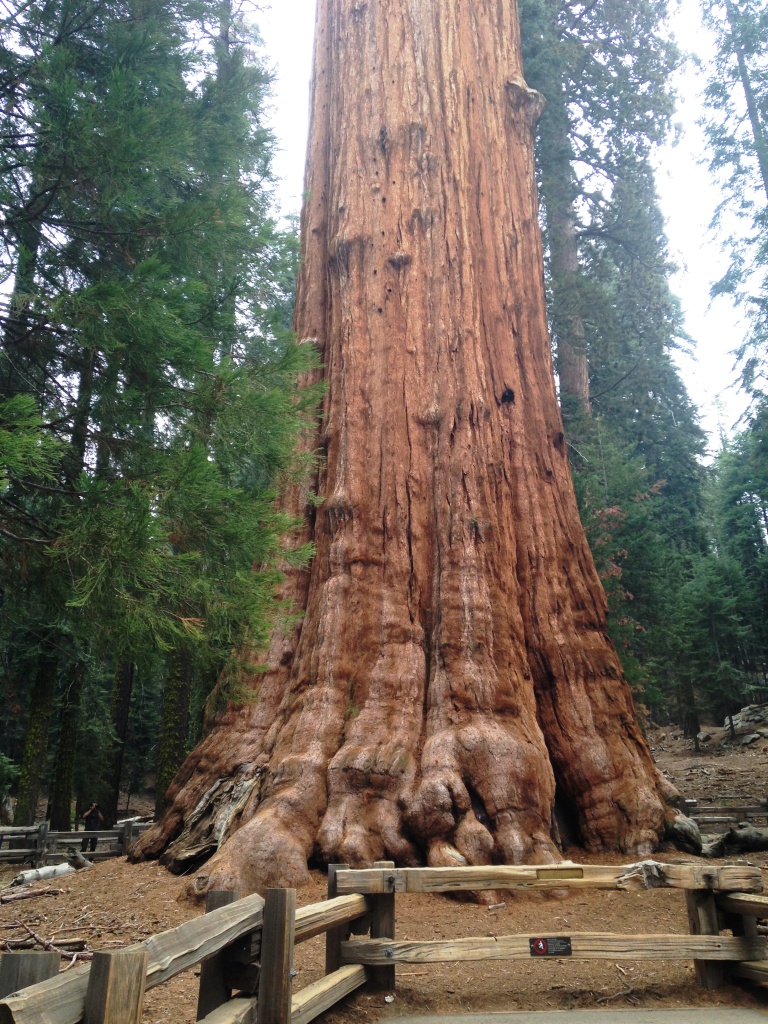
Sequoia National Park
Also in April, I was able to squeeze in a quick trip to see the magnificent forests and meadows at Sequoia National Park. It was a reminder of how wonderful it is to live in Northern California with such treasures nearby.
♦ ♦ ♦
The month ended in Southern California at Dana Point, where I attended my fourth annual retreat of the Executive Committee of the California State Bar Trusts and Estates section.
In addition to action on pending state legislation, including bills written or supported by our section members, the Committee reviewed a proposed uniform law – the Fiduciary Access to Digital Assets Act.
All of us use online data in some form: email, account information, electronic tax filings, data storage, etc. When someone dies or loses capacity, authorization to access online information may be blocked, citing privacy or ownership considerations.
This topic is cutting-edge for estate planners a s we develop forms to authorize only your trusted representative to access online information. An even broader issue is planning for who will receive your digital assets. Some of these may have significant value, such as domain names and blogs. Others may have precious sentimental value to be preserved and not lost.
If you are interested in hearing more about any of these topics, or wish to investigate how they may affect your estate planning, you may contact my friendly office staff to schedule an appointment at 530-272-4292.